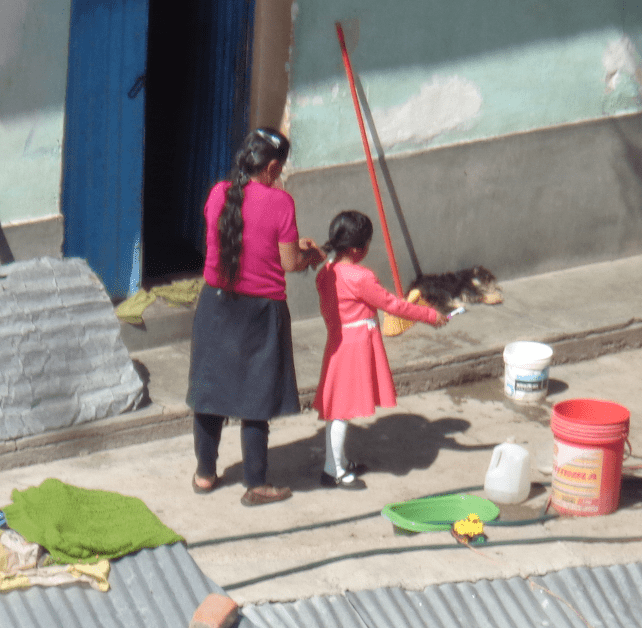
It seems like all the women here wear their hair in ponytails. Before the morning session began, I spied our neighbor across the ravine getting her daughter ready for school.
We’ve gotten to the point where we expect surprises, but the first whopper came when we read the banner: “First Workshop of Native Music.” “First“? They’re thinking there will be more than one? Well, yes, they are thinking there will be more than one.
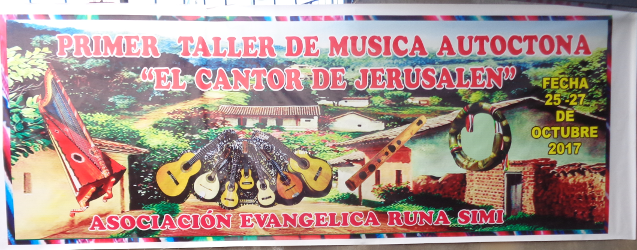
For one thing, the fifty participants they had predicted turned out to be more like fifteen. Many of those who came traveled two hours each way, and the ones Pastor Samuel had hoped would come would have had to travel much farther than that. As they had no way of knowing whether our presentation would be of benefit to them, they stayed home and tended their business. We can only hope that word of mouth from those who did attend will pique the interest of others farther off so they will make firm commitments to attend a second workshop.
At dinner this evening we suggested that any subsequent workshop be held in the mountains. Samuel responded with a story of another gringo trainer who went up after being told not to eat or drink anything while he was up there. He was a guy like me – can’t say no to comestible hospitality – and he wound up on IVs in the Lima hospital.
Fiddlesticks.

The workshop is being held under a translucent shell. The good news is that it is open at both ends so there’s a breeze that goes through when the morning chill burns off and the place begins to swelter. The bad news is that it is open at both ends, and when it rains – unlike Lima, Ayacucho gets torrential rains and, as we found out today, hail – water blows in and comes down the stairs. And, of course, the rain makes so much noise that it’s hard to communicate. But even so, we were able to get through most of what we had prepared for the day.
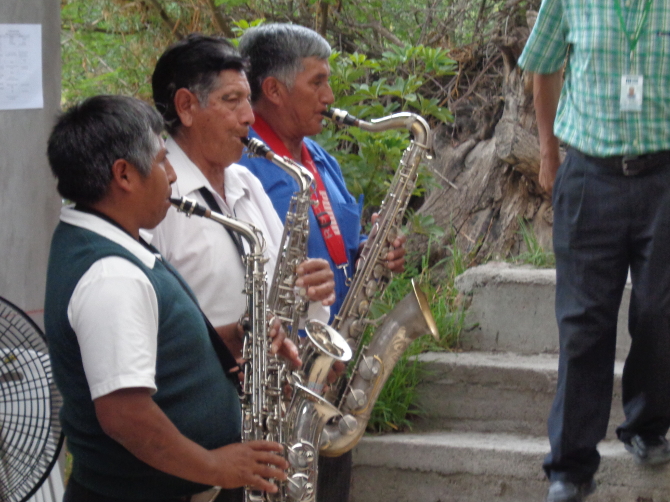
Pastor Samuel and others told us stories about being expelled from churches for “worldliness” after they had performed their own compositions in their Quechua language and music using Quechua instruments. We’re not sure that our limited Spanish enabled us to communicate that at about the same time the missionaries were importing saxophones to provide an alternative to “worldly” music, American Christians were forbidding the use of saxophones in church because they were considered “worldly.”
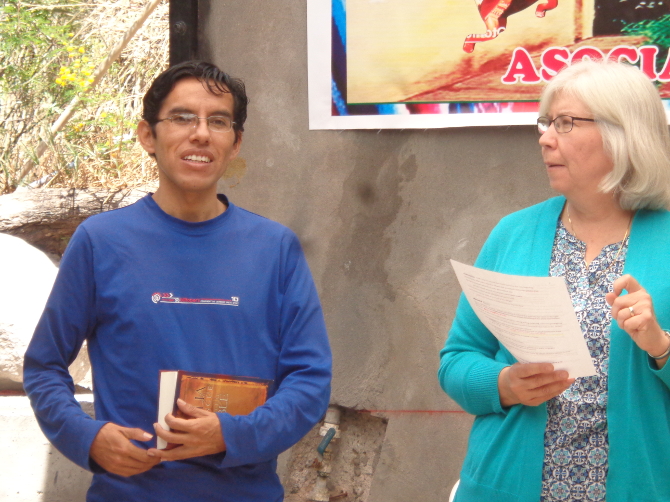
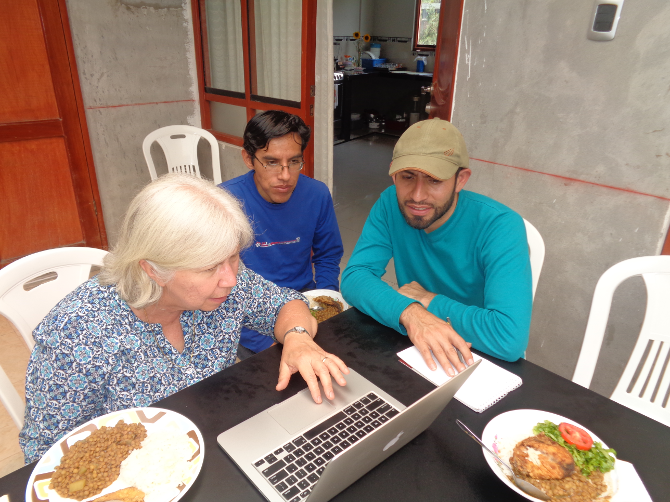
Our translator – names are hard to come by here for some reason, not just because we have a hard time remembering them – taught himself English, speaks it pretty well, and is hoping to become an English teacher. Ginny’s presentations go more slowly than they would without a translator, but he keeps up pretty well.
 Vernacular Discipleship through Music
Leave a comment